

The Paydirt Gazette.
The Story.Many stories are waiting to be told.Yours among them.
I. The Discovery
From a plaque in a museum.
It was January 24th, 1848, when a man by the name of James W. Marshall first set eyes on a shiny yellow piece of metal on the bottom of the tailrace at Sutter’s Mill in California.
“I reached my hand down and picked it up; it made my heart thump, for I was certain it was gold. The piece was about half the size and shape of a pea. Then I saw another.”
Marshall’s discovery set off a rush to the California gold fields by land and sea, and an unprecedented mass migration which forever changed the American frontier.


More than a century later…
II. The Museum
From a visitor’s review.
It was like stepping into a time capsule. The museum’s artifacts looked a little too pristine for how old they were. And the curators appeared and acted as if they were themselves from the 1800s.
One exhibit drew me in: The 1849 Experience. The room was empty, and so quiet I could hear my own heartbeat.
Then, faintly, I heard hammering. A saw working through green timber. Somewhere a bell on a mule’s collar, a fiddle, and men’s voices calling out prices in more languages than I could count. It all seemed to come from a doorway at the far end of the room, lit as if by the afternoon sun.

I stepped through, into the light, and the warmth of that sun closed over me.
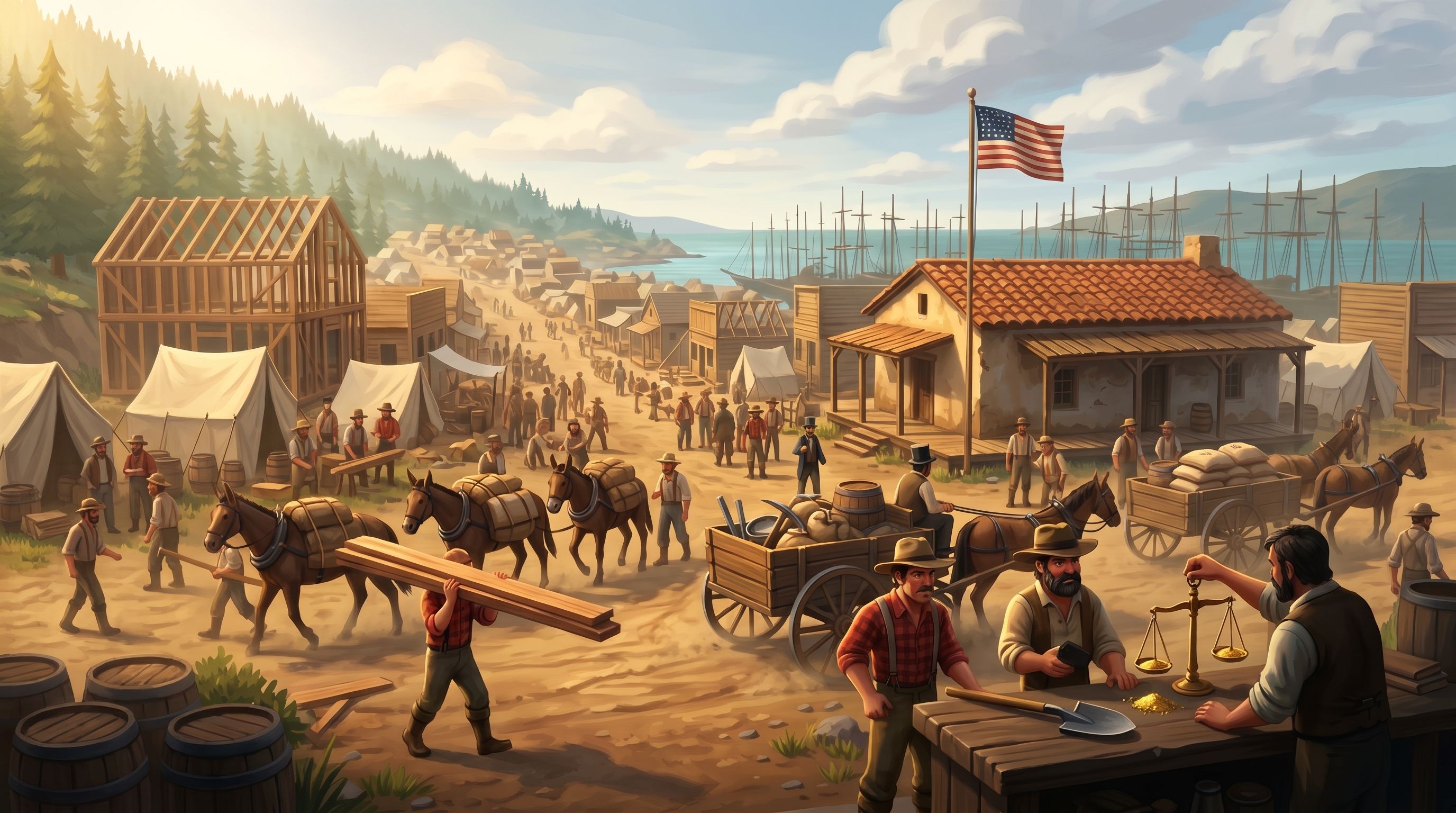
I was standing at the top of a sloping square of trampled dirt. On every side, tents and half-built frame houses were going up as fast as men could nail them, their canvas walls snapping in the wind off the bay. A flag stood over a low adobe building on the corner. Mule trains pushed through the crowd, loaded with picks, pans and sacks of flour. A man weighed out a pinch of yellow dust on a set of scales to pay for a shovel. And below it all, past the rooftops, the cove was thick with the masts of ships, many with no crew left to sail them.
To be continued in a later edition.
BE THE FIRST TO KNOW.
Subscribers to this paper receive word of early access before the general public.
Received. Look to your inbox and confirm your address, and your name goes on our rolls.